A Civil War light artillery battery was a highly mobile, self-contained field unit designed to accompany and support infantry (and sometimes cavalry) with direct fire.
Unlike heavy siege or garrison artillery, light (or “mounted”) artillery used relatively portable guns on field carriages that could be hauled by horse teams across open country, unlimbered, and put into action relatively quickly. “Horse artillery” (or “flying artillery”) was a specialized subset in which every cannoneer rode his own horse for greater speed with cavalry; most light batteries supporting infantry were “mounted” artillery in which only drivers and officers were mounted while the cannoneers walked or rode on the limbers and caissons.
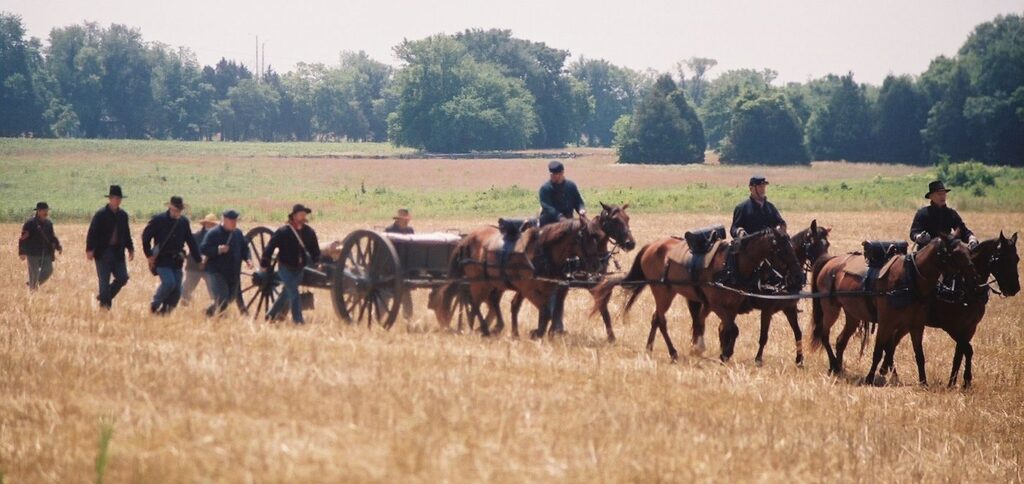
Organization and Life of a Light Battery
A typical Union six-gun battery (the ideal strength; four-gun batteries were also common, and Confederate batteries were often four guns with mixed calibers and four-horse teams) was commanded by a captain and organized into three two-gun sections, each led by a lieutenant.
- Each gun (“piece”) was served by a detachment of about 8–9 cannoneers under a sergeant (chief of piece) and corporals, with numbered positions for loading, aiming, and firing (rammer, sponger, etc.).
- Each gun was paired with a limber (two-wheeled vehicle carrying one ammunition chest) and a caisson (another two-wheeled vehicle carrying two more chests), each pulled by a six-horse team with three drivers.
- Full strength for a six-gun battery could approach 150 men and 100+ horses (including spares, officers’ mounts, and teams for the forge, battery wagon, and supply wagons). In practice, numbers were often lower due to sickness, casualties, and horse shortages.
- Supporting equipment included a traveling forge, battery wagon for tools and spare parts, ammunition reserve caissons, and an ambulance.
Daily life revolved around the care of horses (the real limiting factor for mobility), gun maintenance, ammunition handling, and constant drill. In action, the battery could move at a walk or trot, unlimber on a chosen position, and open fire within minutes. Rate of fire for a trained crew was typically 2 rounds per minute (occasionally higher under stress).
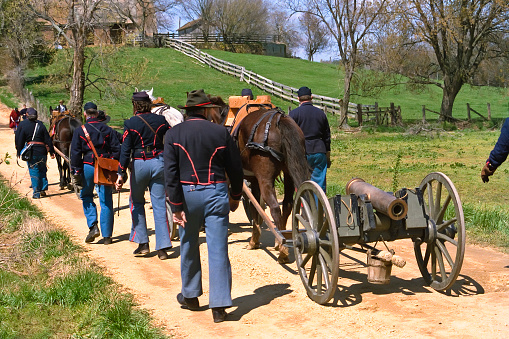
Batteries were initially often attached to infantry brigades for close support, later more often concentrated at division or corps level (with artillery reserves) to mass fire. The 34th Independent Battery New York Light Artillery (originally Battery L, 2nd New York Heavy Artillery, redesignated 34th in late 1863) was a classic light battery of this type, equipped with six 3-inch Ordnance rifles and serving primarily with the 9th Corps.
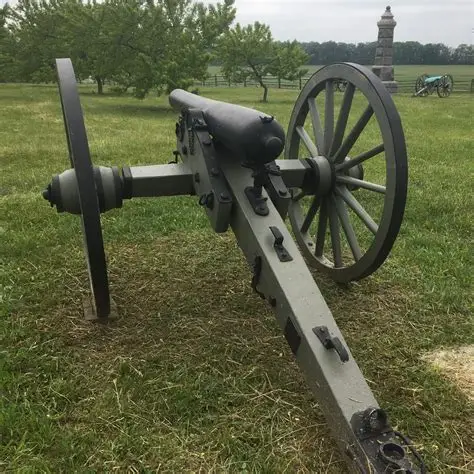
The 3-Inch Ordnance Rifle
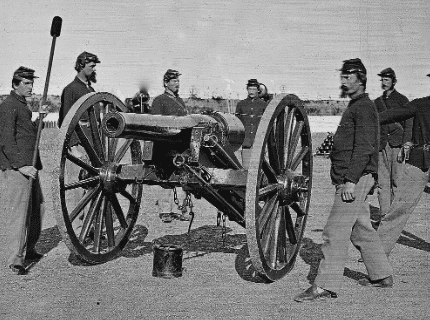
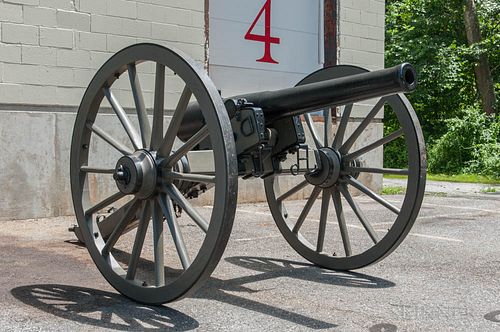
The Model 1861 3-inch Ordnance Rifle (also called the 3-inch Wrought Iron Rifle or Griffen gun) was the premier light rifled field gun of the war. Manufactured primarily by the Phoenix Iron Company in Phoenixville, Pennsylvania, from wrought iron (using a process of wrapping and welding iron bars or plates around a core, then boring and turning), it was prized for reliability and accuracy.
Key specifications (approximate, with minor variations in sources):
- Bore: 3 inches, with 7 grooves.
- Tube weight: ~820 pounds; overall gun + carriage ~1,720 pounds.
- Length: ~69 inches.
- Projectile: ~9–9.5 lb shells, case shot (shrapnel), or bolts (solid shot); 1 lb black powder charge.
- Muzzle velocity: ~1,215 ft/s.
- Effective range: ~1,800–1,830 yards at 5° elevation; maximum ~4,000+ yards at higher elevations.
- Rate of fire: 2–3 rounds per minute with a trained crew of ~6–9 men.
Ammunition included common shell (explosive, time or percussion fuse), conical case shot (shell filled with balls for airburst shrapnel), solid bolts, and canister. Hotchkiss or Schenkl projectiles were preferred. It was mounted on a standard No. 1 field carriage with large wheels for mobility.
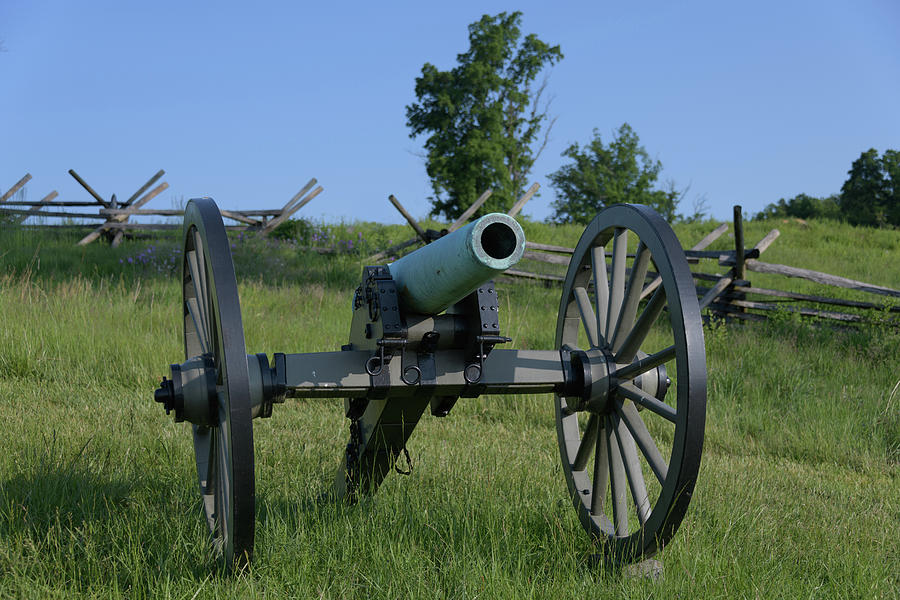
Pros and Cons Compared to Other Guns
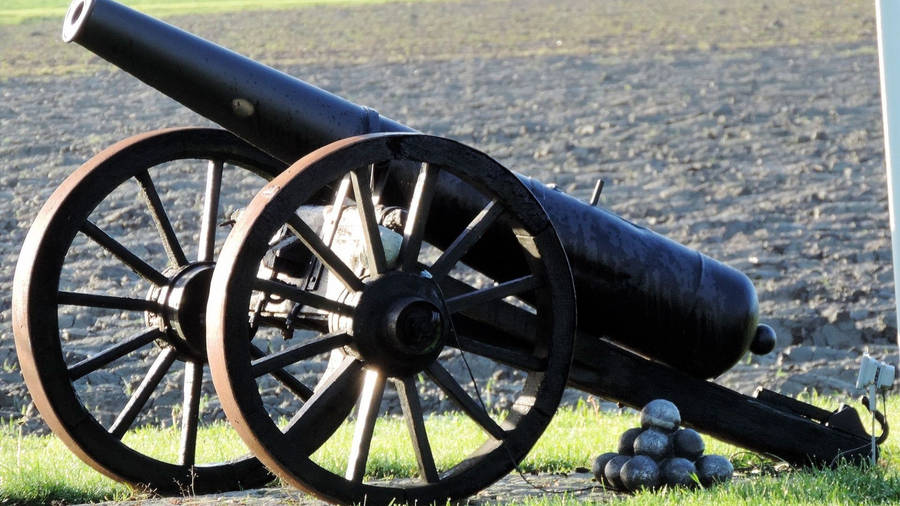
Compared to the 12-pounder Napoleon smoothbore (the other workhorse of field artillery):
- Pros of the 3-inch: Far greater accuracy and effective range for shell and case shot against distant targets (enemy batteries, troop concentrations, or fortifications). Lighter tube made it more mobile, especially prized for horse artillery. Extremely reliable—only one recorded burst in the entire war (at the muzzle while firing double canister at the Wilderness).
- Cons: Weaker at very close range with canister. The smaller bore held fewer balls, and the rifling caused the canister to spread irregularly, reducing its “giant shotgun” effect. Effective canister range was roughly half that of the Napoleon (which excelled out to ~300–400 yards). Larger explosive payload in Napoleon shells/case shot made them more destructive at moderate ranges in broken or wooded terrain. Smoothbores could also ricochet solid shot effectively across open ground.
Compared to the 10-pounder Parrott rifle (similar caliber and role):
- Pros of the 3-inch: Dramatically safer. Parrotts (cast iron with a wrought-iron reinforcing band) were prone to bursting without warning, demoralizing crews and limiting aggressive use. The Ordnance Rifle was lighter and more durable.
- Cons: Very similar ballistic performance; Parrott ammunition could be used in an emergency but fitted poorly (different groove count). By 1864 the Ordnance Rifle largely superseded the Parrott in preference.
Versus larger guns (20-pdr Parrott, 4.5-inch siege rifles, etc.):
- The 3-inch was far more mobile and suitable for field operations with infantry. Larger guns had greater destructive power and range but were slower to move, required more horses or were restricted to prepared positions, and were less practical for the fluid support of advancing or defending infantry lines. They were better for siege work or fixed batteries.
Overall, many artillerymen preferred a mix: Napoleons for close defense and versatility, 3-inch rifles for long-range precision and counter-battery work. At Gettysburg, roughly 40% of Union guns were 3-inch rifles.
How and When 3-Inch Guns Supported Infantry
Light batteries with 3-inch rifles supported infantry in several distinct ways, depending on the phase of battle and terrain:
- Long-range preparation and counter-battery fire (1,000–1,800+ yards): Before or during an infantry advance, the guns shelled enemy troop concentrations, artillery, or works to suppress fire and disrupt formations. Their accuracy made them excellent for dueling opposing batteries or picking off specific targets. Case shot (airburst shrapnel) was particularly useful against exposed infantry. Firing over the heads of friendly infantry was possible but risky due to smoke, imperfect fuses, and the need for precise elevation—doctrine often preferred placing guns on the flanks of infantry lines rather than directly behind them.
- Accompanying support during movement: Batteries moved with or just behind infantry columns, then deployed on favorable ground (ridges, open fields) to cover the advance or defend a position. Sections (two guns) could operate semi-independently. Mobility allowed them to shift to threatened flanks or follow a successful assault.
- Close defense against infantry assaults (under ~500 yards, especially with canister): When enemy infantry closed, crews switched to canister (or double canister in extremis). While less devastating than Napoleons in this role, a battery of 3-inch rifles could still break up or blunt an assault, especially when combined with infantry fire. This was common in defensive actions, such as covering a flank or holding a key position. The 34th Battery’s action at Peebles’ Farm (Poplar Springs Church) near Petersburg on 30 September 1864 is a good example: after supporting infantry broke, the guns (under temporary leadership) fired double canister into a Confederate assault and held the line.
- Covering retreats, pursuits, or flank protection: The light weight allowed rapid limbering and withdrawal, or rapid movement to a new position. In pursuit, they could shell retiring columns.
In practice, for a unit like the 34th Independent Battery in the 9th Corps, this meant supporting infantry in the major campaigns of 1862–65 (Cedar Mountain through Appomattox): long-range fire in open fields or against works, close-range canister when lines were threatened (as at Spotsylvania or Petersburg), and mobile repositioning as the corps shifted between theaters (East, West at Vicksburg/Knoxville, then back East).
Fuses were imperfect, smoke limited visibility, and friendly fire was a constant risk, so coordination with infantry commanders was essential.
Artillery accounted for a smaller percentage of total casualties than modern readers might expect (infantry fire dominated), but its psychological and suppressive effect, plus its ability to break charges or silence opposing guns, was often decisive in set-piece engagements.
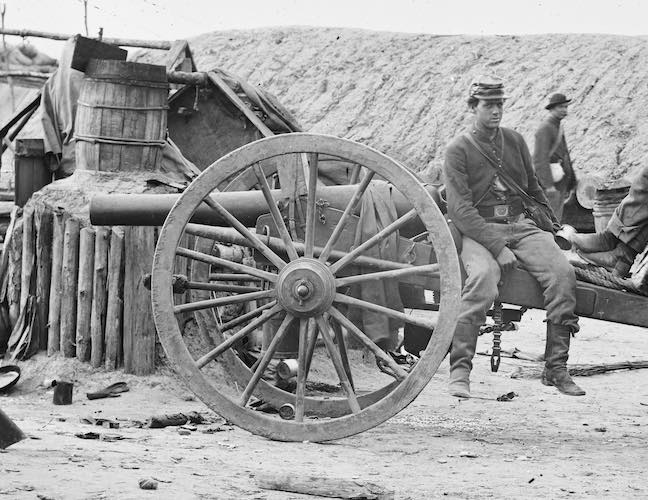
In short, the 3-inch Ordnance Rifle gave light batteries a reliable, accurate, and mobile tool that excelled at longer ranges while still providing useful close support—making it one of the most effective and popular field pieces of the war.
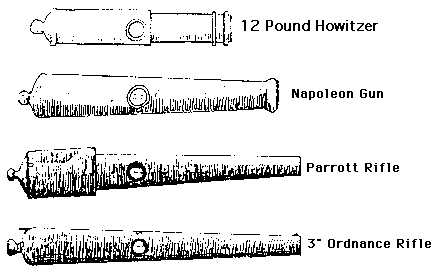
Rough drawn sketch of weapons used in artillary units
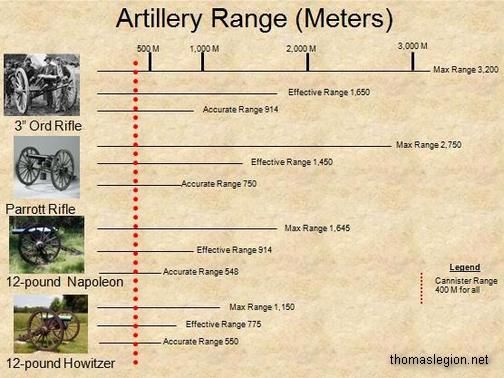
Range comparisons of Civil War Artillery
Firing the 3 inch Ordnance Rifle