The “Bad Boys of Flushing”
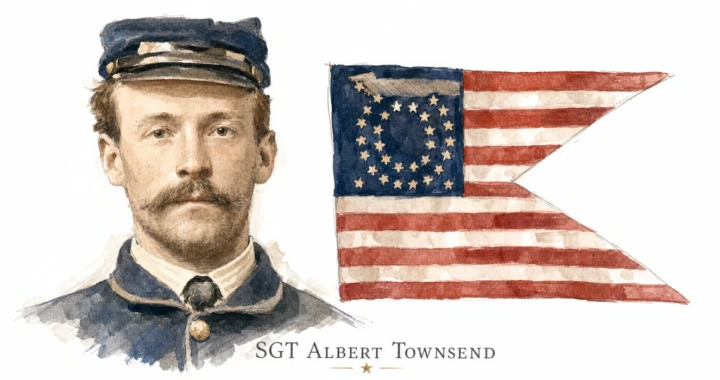
The “Bad Boys of Flushing” refers to the men of the 34th Independent Battery, New York Light Artillery (also known as the Flushing Battery or Hamilton Light Artillery), a Union volunteer unit recruited primarily in Flushing, Long Island (present-day Queens, New York). The nickname appears in recent coverage and materials tied to the forthcoming film So Help Me God, which centers on Sgt. Albert Townsend of the battery.
The battery originated from the artillery company of the 15th New York Militia. Captain Thomas L. Robinson received authority in July 1861 to recruit it, drawing mainly from Flushing-area volunteers. It mustered into federal service for three years around November 18–28, 1861 (sources vary slightly on the exact date), initially as Battery L of the 2nd New York Heavy Artillery. It left the state for Washington, D.C., on December 2, 1861, with roughly 150 men. It operated largely as a detached light battery and was formally redesignated the 34th Independent Battery on November 19, 1863, after a majority of the original members reenlisted as veterans in the field.
Command passed from Robinson (discharged March 1862) to Captain Jacob L. Roemer (also spelled Roemer), a German-American merchant from Flushing who led it for most of the war and later received a brevet major rank. The unit served extensively with the 9th Corps in both the Eastern and Western Theaters. Its record includes Cedar Mountain, the Second Manassas campaign (including Groveton/Brawner Farm), operations around Antietam/Fredericksburg, the Siege of Vicksburg and related Mississippi actions, the Knoxville campaign (including Fort Sanders), the Overland Campaign (Wilderness, Spotsylvania, North Anna, Cold Harbor), and the long Siege of Petersburg (including the Crater, Weldon Railroad, Poplar Springs Church/Peebles Farm, Hatcher’s Run, Fort Stedman, and the fall of Petersburg). It participated in the Appomattox campaign and the Grand Review before mustering out on June 21, 1865, at Hart’s Island, New York Harbor.
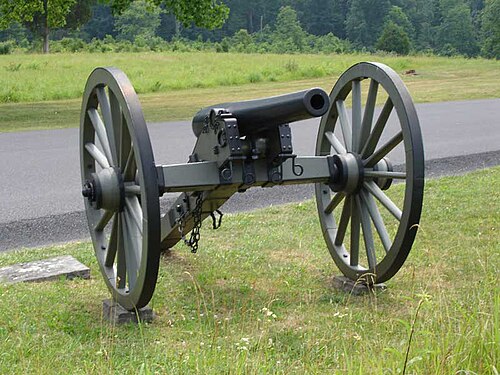
The battery reported participation in dozens of engagements (one internal summary claimed 52). Official losses were relatively light for the intensity of service: 7 enlisted men killed or mortally wounded and about 15 more to disease and other causes, for a total of 22 deaths. It used 3-inch Ordnance rifles and earned a solid reputation for reliability.